
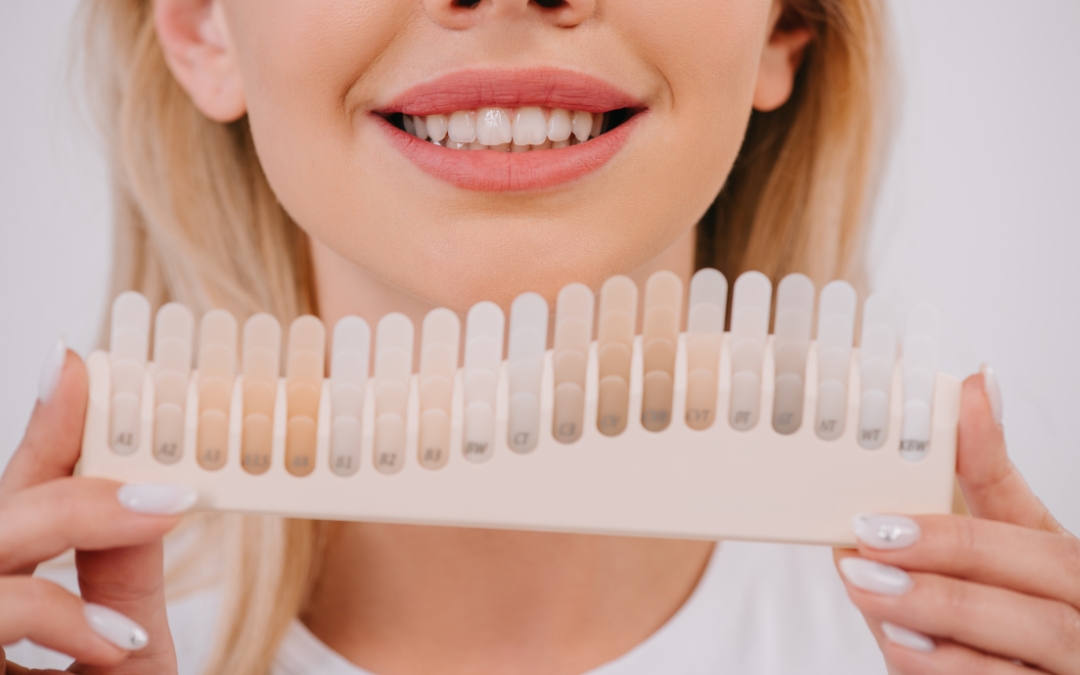
A brighter smile is something many people want, but choosing the right level of whiteness can be confusing. Teeth do not naturally come in one universal shade. They can have warm, yellow, gray, or neutral undertones, and their appearance can change with age, diet, and everyday habits.
This is where a tooth shade chart can be useful. It gives you a simple visual reference for understanding your current tooth color and comparing it with lighter shades. Knowing how shade charts work can also help you develop realistic expectations before starting a whitening treatment.
What Is a Tooth Shade Chart?
A tooth shade chart is a collection of tooth-colored samples used to identify and compare different shades of teeth. Dental professionals may use these charts when evaluating a patient’s natural tooth color or checking changes after cosmetic dental treatment.
The shades generally range from darker or warmer tones to lighter, brighter tones. The chart does not determine exactly how white your teeth will become, but it can help you understand the difference between your current shade and a possible result.
Why Does Your Starting Shade Matter?
Your starting tooth color can influence how noticeable your whitening results will be. Teeth with surface stains may respond differently from teeth affected by deeper discoloration.
For people considering teeth whitening Phoenix, a dental consultation can help determine what may be causing discoloration and whether whitening is a suitable option. This can make it easier to choose a treatment that matches your goals instead of simply trying to reach the lightest shade on a chart.
How To Use a Tooth Shade Chart
Using a shade chart is relatively simple when you understand what to look for. A dental professional can help you compare your teeth with the chart under appropriate lighting.
Check Your Current Shade
Start by identifying the shade that most closely resembles your natural teeth. Your teeth may not match one sample perfectly, and that is completely normal. The purpose is to find the closest starting point.
Select a Realistic Goal
Think about how much brighter you want your smile to look. The whitest shade available may not always be the best choice. A shade that looks bright while still complementing your natural appearance can create a more balanced result.
Compare Your Results
After whitening, your teeth can be compared with the chart again. This gives you a better idea of how much your tooth color has changed instead of relying only on your memory.
What Determines Your Natural Tooth Color?
Several factors contribute to the color of your teeth.
Genetics: Your natural tooth shade is partly influenced by your genes. Some people naturally have lighter teeth, while others have warmer or darker tones.
Age: Over time, enamel can become thinner, allowing more of the yellowish dentin underneath to show through.
Food and Drinks: Coffee, tea, red wine, berries, and dark-colored sauces can leave stains on the teeth.
Tobacco: Smoking and other tobacco use can cause noticeable discoloration over time.
Oral Hygiene: Plaque and buildup can make teeth appear dull. Regular brushing and cleaning between the teeth can help keep your smile looking cleaner.
What Can Influence Whitening Results?
A tooth shade chart is helpful, but several other factors determine how much your teeth may lighten.
Type of Staining
Surface stains can often respond well to whitening. Deeper or internal discoloration may be more difficult to treat with standard whitening products.
Whitening Treatment
Different whitening methods use different concentrations and application techniques. Your dentist can recommend an option based on your teeth and desired results.
Your Natural Tooth Structure
The color of the dentin beneath your enamel affects the overall appearance of your teeth. Whitening cannot completely change the natural characteristics of your teeth.
Following Instructions
Using a whitening product more often or leaving it on longer than recommended does not necessarily produce faster results. It may instead increase sensitivity or irritate your gums. Following the recommended directions is important.
Can Everyone Reach the Same Shade?
No. Whitening results vary from one person to another. Your current tooth color, type of staining, age, dental history, and whitening method can all affect the final outcome.
A consultation with a dentist in Phoenix can help you understand what type of improvement may be realistic for your smile. Your dentist can also check for cavities, gum concerns, or existing restorations before recommending whitening.
Keep in mind that whitening treatments work on natural teeth. Crowns, veneers, fillings, and other restorations generally do not lighten in the same way. If you have visible restorations, this should be considered when planning cosmetic treatment.
How To Keep Your Smile Looking Whiter
Whitening does not permanently prevent new stains. Your daily habits can affect how long your results last.
- Limit staining foods and drinks: Coffee, tea, red wine, and dark sauces can contribute to discoloration.
- Practice good oral hygiene: Brush twice a day and clean between your teeth regularly.
- Visit your dentist regularly: Professional cleanings can remove buildup and help maintain your smile.
- Ask about touch-ups: Depending on your whitening treatment and lifestyle, occasional maintenance may help you keep your preferred shade.
Create a Brighter, Natural-Looking Smile
A tooth shade chart can make the whitening process easier to understand by showing where your teeth are now and helping you establish a realistic cosmetic goal. Rather than focusing only on achieving the brightest possible shade, consider what will look natural and complement your smile.
If you are thinking about whitening your teeth, schedule an appointment with Thomas Dental in Phoenix, AZ to discuss your goals and learn which whitening option may be right for you.
Frequently Asked Questions
What does a tooth shade chart show?
It shows a range of tooth colors that can be used to compare your natural tooth shade with other shades before or after cosmetic treatment.
How many shades can teeth whiten?
There is no guaranteed number. Results depend on your starting color, the cause of discoloration, the whitening method, and how your teeth respond.
Can a shade chart predict my exact whitening result?
No. It provides a helpful comparison but cannot guarantee a particular final shade.
Can yellow teeth be whitened?
Many yellowish surface stains can improve with whitening. However, the cause of the discoloration determines how well the teeth are likely to respond.
Will whitening change the color of crowns or veneers?
Generally, no. Whitening primarily affects natural tooth structure, so existing restorations may remain their original color.
Why are some teeth naturally darker than others?
Differences in enamel thickness, dentin, genetics, age, staining, and previous dental treatment can all affect tooth color.
Can whitening make teeth too white?
It is possible to overuse whitening products, which can increase sensitivity and gum irritation. Following professional or product instructions is important.
How long will whitening results last?
Results vary from person to person. Your diet, oral hygiene, tobacco use, and natural aging can affect how quickly discoloration returns.